John and I had the opportunity to be in meetings this summer that just happened to be in Switzerland. A ridiculously amazing opportunity, and I embraced it with enthusiasm.
We arrived in Switzerland with an ongoing heat wave. The temperatures were high, the place we stayed had no air conditioning, and I was a little surprised at the warmth, as I fully expected it to be cool and refreshing.
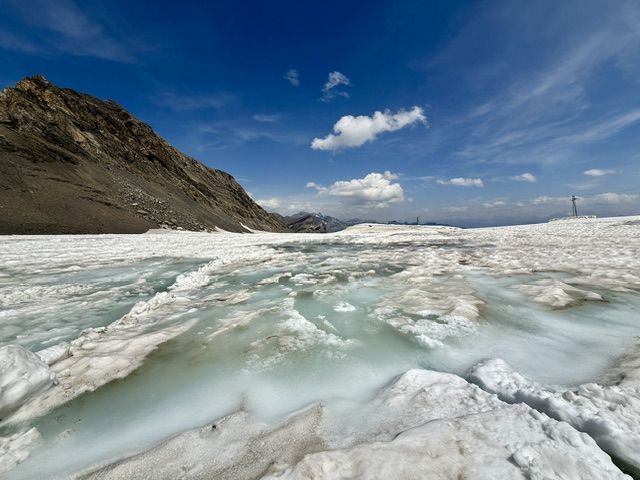
Between meetings, we went on an outing to a local glacier, a welcome excursion, considering everyone was sweating like we were back in Florida. Riding the gondola up increased the heat factor considerably, but when we stepped out onto the glacier itself, it was, to say the least, a breath of fresh air.
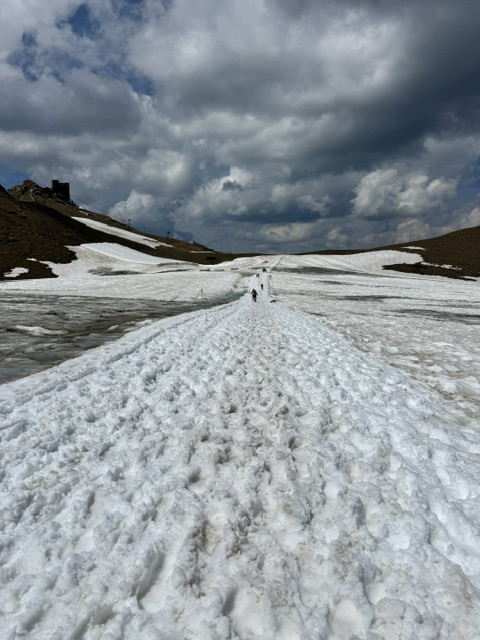
I accompanied two friends on the hike to a higher elevation; John wasn’t in a hiking mood. As we set out, the first thing I noticed was how slushy the snow was. We were all wearing jackets, but after a bit of walking, trying to keep our balance in the slippery snow, we shed those and kept going.

Having never been on a glacier, I had an idea of what it would be like. Solid snow and ice stretching as far as the eye could see.
Not so much.
There were huge patches of ground where snow had been, and several places were blanketed with thick coverings to protect the snow and ice from melting in the heat of the sun. Tiny streams flowed around us from the snowmelt, and I stepped in one too many, soaking my shoes and socks.
Walking wasn’t easy. It was a cross between gliding as if we were on cross-country skis without skis and slip-sliding in the slush.
My quads whined about it the next day.
It was a delightful though unexpected experience. We anticipated cold and ice; we got warm and slush.
Often what we expect in life doesn’t happen as we anticipated. Circumstances that are beyond our control impact situations, and we’re expected to pivot in the moment. Adapt.
Elijah was a prophet to the kingdom of Israel, which had turned to idol worship instead of the worship of the one true God. He particularly annoyed King Ahab and Queen Jezebel, for he had slaughtered four hundred and fifty of their prophets of Baal. Jezebel swore she’d see Elijah killed.
Elijah ran for his life, for he was afraid he would die at Jezebel’s hand.
When he reached Mount Horeb, the word of the Lord came to him: “What are you doing here, Elijah?” I Kings 19:9.
Elijah, exhausted and fearful, felt he was the only prophet left of the Lord. He dreaded that he, too, would be killed. God called him to stand on the mountain so he could experience the presence of the Lord. He imagined the power of what that would look like.
A powerful wind tore at the rocks around him, but the Lord wasn’t in that. Next, a massive earthquake shook the ground, but the Lord wasn’t in that. A blazing fire swept through next, but the Lord wasn’t in the fire.
After the fire came a gentle whisper, a quiet voice. Not what Elijah anticipated, but it was how the Lord chose to communicate with him. Not overwhelming or fearsome, but tender. God took into account Elijah’s experiences and fear; He spoke to him in a way the prophet could embrace.
God is often seen as intense and severe. We look around the world and see pain, suffering, and loss, and wonder how God could allow that. People forget that we’re the ones who create the appalling circumstances; we’re the ones who create pain for others.
Like the sun warming the glacier, the mild climate confused people. But that’s the reality of the glacier.
God’s warmth embraces us as we allow Him into our lives. He knows our needs better than we do.
Often, we need to redefine how we see God.


Leave a Reply