Growing up, my dad would occasionally hunt pheasants with friends. He didn’t enjoy hunting with a gun as much as he enjoyed fishing. Mom didn’t like cooking fish or game, so Dad learned to cook them.
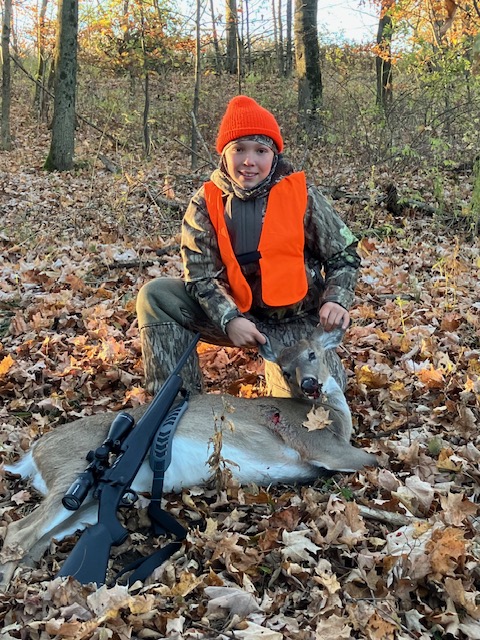
My grandsons, however, have a grandfather who learned to hunt when he was a child. He learned to hunt for food; they ate whatever they shot. So Ron took three of my grandsons deer hunting in Pennsylvania.
And all three boys shot a deer. The family will be eating venison for quite a while.
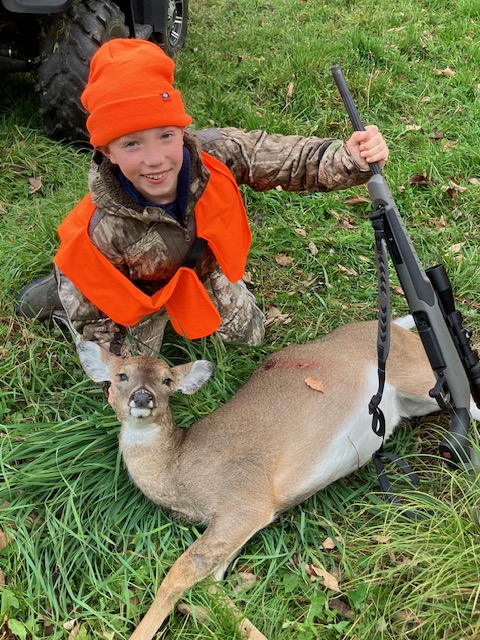
Each of the boys got tags to have the opportunity to hunt deer. Never having hunted myself, I was told that this is actually a humanitarian act because culling the herd makes it easier for the remaining deer to live with enough food; fewer deer means there would be less starvation during the winter months.
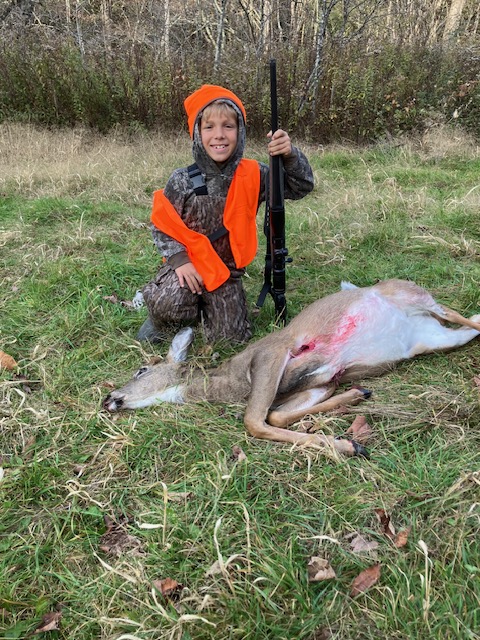
I have mixed emotions about guns, but Ron has carefully and thoroughly helped the boys understand the rules and safety of using guns. What I appreciate is that each boy hunted responsibly, with purpose, care, and safety.
What’s interesting is that any sportsperson must have a tag to hunt deer. The tag labels the privilege for what it is: permission to carry out an activity that is surrounded by rules.
Tags are actually things everyone deals with. Tags are labels we give ourselves, labels others give us, or we give freely to others. But unlike the deer tags the boys got, we rarely give permission for the negative names people give us. Often, such tags are burdensome and hurtful. Names become attached to us that we’ve never given people permission to use.
Growing up, I was on the heavier side, so Dayle the Whale became something that cut deeply. Mom, at one point, cut my hair poorly in anger, and going to school the next day, I was told I looked like someone who’d run over my head with a lawnmower. “Ugly” soon followed that. And though my hair grew out and I lost weight, I still see “chubby” when I look in a mirror, and my hair is always something I don’t like. No matter the cut.
It’s no longer others’ voices I hear; the judge in my head is my own voice.
Satan, God’s enemy and ours, is the great accuser, the father of lies. He subtly distorts the truth enough that we believe it instead of questioning its veracity. Charles Spurgeon, a nineteenth-century preacher, once said, “Discernment isn’t knowing the difference between right and wrong. It’s knowing the difference between right and almost right.” We’re so easily tripped up by the small lies. Drifting from truth doesn’t begin with miles of falsehoods; it begins with inches of untruths.
“Jesus said to the people who believed in Him, ‘You are truly my disciples if you remain faithful to My teachings. And you will know the truth, and the truth will set you free.’” John 8:31-32. To be set free with His truth means to cling to what He has said; hold on tightly to His teachings. Believing Him is true freedom; freedom from the condemnation of our false labels, the treacherous tags, and the despair of our brokenness.
When Ron took the three boys hunting, their tags gave them permission to shoot deer. We alone can permit what we will believe in our hearts; will it be the judgment of lies, or will it be the truth of our identity in Jesus?
What tags and labels are you allowing to define you?


Leave a Reply