The crazy cold snap and accompanying snowfall/sleet freeze have added complications to many lives. Schools have had to close, people need to clear their roofs from an abundance of snow accumulation so it won’t collapse into their homes, and driving has become a challenge as iced-over streets look more like ice skating rinks than roadways.
For some, it’s a delightful new experience.
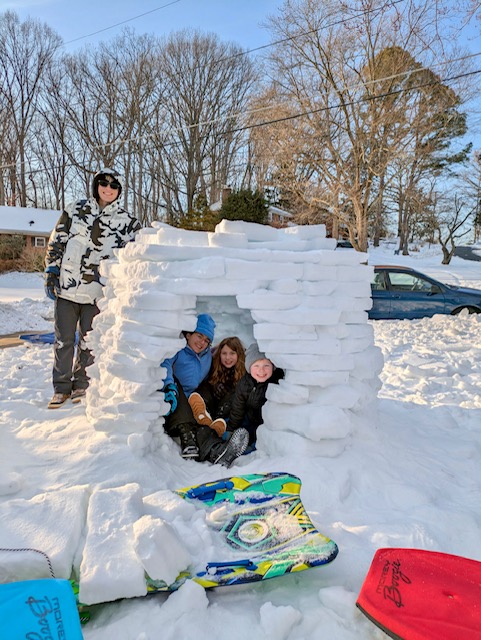
Melody and her family live in the DC area, and they’ve gotten snow and sleet and have had to deal with the slipping and sliding just going outdoors. But the kids found a wonderful alternative to merely sledding.
They built an ice fort.
With the help of an older friend, they managed to create ice bricks that made wonderful building materials, allowing them to create a substantial-sized abode not possible in most winters.
Building things is a passion for many people. Seeing something grow from nothing is part of being human; from the time kids are little, they create buildings out of Magnatiles, Lincoln Logs, Duplo blocks, and ultimately Legos. What tends to be a common trait is building tall towers and then knocking them down, to the delight–or despair–of those who put them together.

Invented in 1932 by Danish furniture maker Ole Kirk Christiansen, it was his idea to create miniature versions of the furniture he made with blocks that could be fitted together to form a variety of shapes. The name Lego comes from two Danish words, ‘leg godt”, which means “play well”. It has expanded into a worldwide phenomenon that appeals to all ages. The idea was to use the small bricks to create structures, tear them down, and make something new.
We love to build.
Buildings are often monuments to architectural creativity. Like the kids’ ice fort in Virginia, contractors enjoy using a variety of materials. Concrete, steel, wood, stone. Some structures require certain materials because of the location of the build. Because we have a plethora of termites here in Florida, most homes are made with stucco. Buildings are constructed to last.
Jesus used the idea of building to help people understand that what He taught was useful in life decisions, helping people live stronger, more productive, happier lives.
He told a parable of two men who built their homes on two different foundations. One built his home on rock, which gave him a solid foundation when the weather threatened, when winds blew, and rain pelted down. It stood firmly because of its foundation. “But everyone who hears these words of Mine and does not put them into practice is like a foolish man who built his house on sand. The rain came down, the streams rose, and the winds blew and beat against that house, and it fell with a great crash.” Matthew 7:26-27.
What Jesus was teaching here primarily was about who we are, not what we do. Our “houses” are our lives, shaped by our choices, impacted by those who influence us. Jesus turned the tables on cultural and religious norms by speaking of how we live our lives, not by fastidiously following rules, but by receiving His grace and forgiveness so we may continue to live with hope even when we fail.
We will fail. But if our lives are built on the truths of Jesus found in the Bible, we’ll live lives of satisfaction and hope.
Legos will be taken apart. Ice forts will melt. Even a building constructed by known architects will one day fall.
But those who live by the grace and mercy of Jesus will stand firm no matter how tough life gets.
That’s an eternal promise.


 Tip of My Iceberg
Leave a reply to katiesencouragementforyou Cancel reply