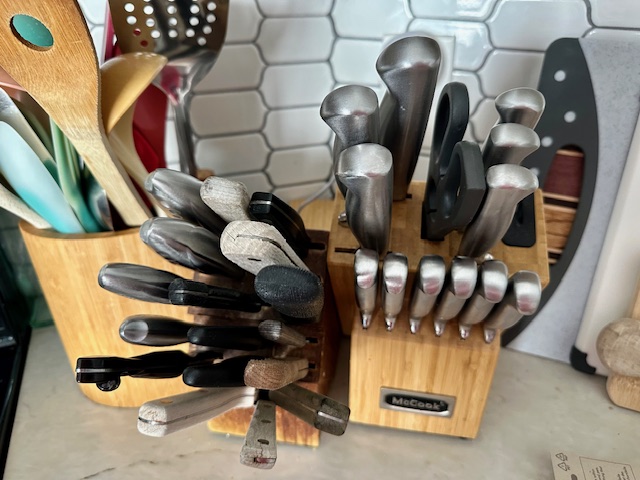
We have all types of kitchen knives. They’ve been one of those items that we’ve slowly accumulated over our years of marriage.
I don’t believe we’ve ever gotten rid of any. I come up with the reasoning that it could be used for something sometime. Maybe.
When knives get old, they get dull, which suited me just fine. Granted, it made chopping an onion more challenging, but the dull knives worked well enough. It might have taken a little longer to accomplish the task, but not enough time to warrant getting new ones.
That is, until my husband tried using several of the knives and declared them unfit for kitchen duty.
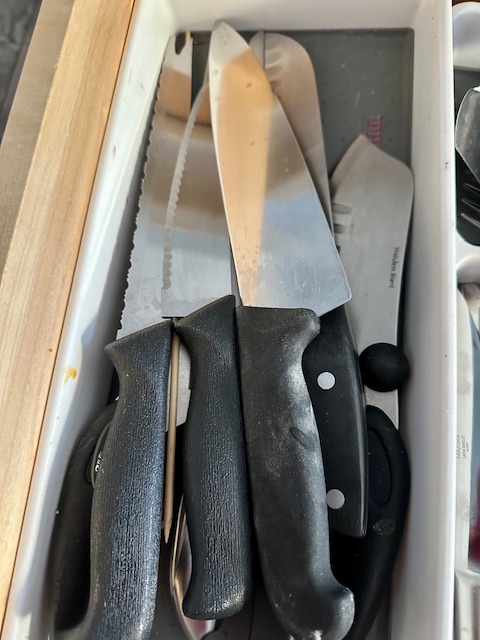
He purchased a new set. And I’ve been suffering ever since.
I’m not sure if it’s my lack of observation or not being able to talk to people and chop things at the same time, but these new knives have chopped more than vegetables. Not a week goes by that one of my fingers isn’t bandaged from a very sharp knife, doing more than it should.
The fact is, this is all my fault. The knife isn’t wielding itself; I am using it to function as it was made. That truth hasn’t kept me from yelling at knives when I’ve cut myself, but frankly, they don’t care.
We purchase kitchen gadgets, gardening implements, or construction tools to do specific jobs. They’re meant to be useful, and their design contributes to that usefulness. I can’t throw away a hammer because I banged my thumb with it. Nor can I dispose of my sharp knives because I need them to cut things.
We have skill sets that let us accomplish the responsibilities we’re supposed to carry out. Choosing to refuse to use the talents we’re given is a waste; we become dull to who we really are, until we completely lose what we’ve been given. I played piano for quite a few years, but I haven’t played for decades. I couldn’t plink out a tune with any kind of skill.
Jonah understood this. He was a Hebrew prophet tasked by God with bringing the message of God’s judgment on Nineveh if they didn’t repent and change their ways. He didn’t want to do what he’d been called to do. “But Jonah got up and went in the opposite direction to get away from the Lord.” Jonah 1:3. He didn’t want Nineveh to have the chance to change, so rather than obey God, he tried to run away from the Lord. God hurled a powerful wind over the sea, and a violent storm threatened to destroy the ship he was on. He admitted to the sailors that he was running away from God, and he encouraged them to throw him into the sea. When they did, the storm stopped at once. But Jonah was swallowed by a large fish, and he spent three days in its belly before it spat him on shore.
Jonah reluctantly shared God’s message with the king and people of Nineveh, and much to his chagrin, they changed. “The people of Nineveh believed God’s message, and from the greatest to the least, they declared a fast and put on burlap to show their sorrow.” Jonah 3:5.
Jonah wasn’t pleased with God’s mercy; he was angry at God for saving Nineveh. These people had been Israel’s enemies, and he didn’t think they were worthy of salvation. God confronted him, asking if he had the right to be angry when 120,000 people, who had lived in spiritual darkness, had seen the light of God’s hope.
Jonah had become dull to the glory and goodness of God, selfishly wanting His grace limited to the Israelites. God loves all people, and He longs for everyone to receive His gift of love and forgiveness.
Like my too-sharp knives, we’ve each been given the tools to understand and embrace the love of God.
The question is, will we choose His way?


 Tip of My Iceberg
Leave a comment