I’ve never considered myself a confident person. Sure, I am confident in certain situations and with select groups. But unabashed confidence isn’t my typical demeanor, especially if I’m in a place I’ve never been.
I have a daughter, Melody, who is one of the most confident people I know. Even if she’s not completely sure of an answer, she’ll respond with an assurance that she knows what she’s talking about. She thrives in new and different situations; I am amazed at her self-assertiveness. It doesn’t seem to faze her when she’s wrong. She adjusts.
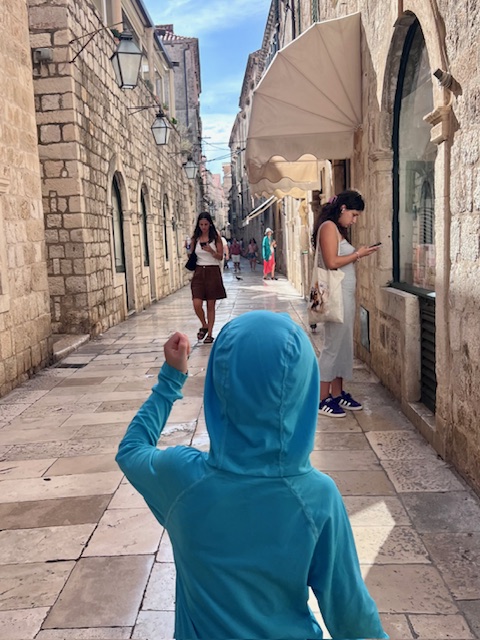
Beck is cut from the same cloth as his aunt. He and his parents have been in Europe for some rest and relaxation. The first stop was Croatia, a place where none of them had ever been. The novelty of the country didn’t raise any hesitations from Beck. He led the way with boldness.
Granted, Beck is six, and his parents were right behind him. His adventurous spirit has been shaped since he was little; living in Colorado, he and his family have climbed and hiked in mountains, challenging themselves with new spaces and places. He hasn’t learned to be wary of the unknown. Beck approaches life as a wonderful escapade about to happen.
Not everyone has the same sense of confidence when embarking on new experiences. The older I’ve gotten, the more I find I like to lean into what is more known, understanding more of what I can expect. I’ve learned life can be hazardous if I’m not careful. My haphazard living when I was younger has morphed into greater caution.
One of my favorite characters in the Bible is Moses, a man known for leading the Israelites out of Egypt after having been used by God to bring ten horrific plagues on Pharaoh and his people.
What many miss is that Moses, born a Hebrew and raised in the court of Pharaoh after his daughter fished him out of the Nile, became cautious when he decided to choose his own path instead of following God’s.
He knew he’d be used to help free his people from slavery in Egypt, so when he was older and saw an Egyptian hurting one of his people, he killed the Egyptian, buried him, but was found out. He had to run for his life.
He hid in the desert for forty years, becoming a shepherd.
One day, he came across a bush that was burning but wasn’t consumed. God spoke to him from the bush, telling him that he’d been chosen to lead God’s people out of Egypt.
Moses had experienced the consequences of overconfidence. As God told him how He would work through him, Moses became increasingly hesitant. Five times he declined the Lord’s offer to help His people.
What Moses discovered was that, as he trusted God to do what He’d promised, not only did he see God use him to help the Israelites, but he grew in confidence with the skills God was giving him. His convictions about God expanded so that he trusted God more readily.
Not only was he used to free his people, but they were also able to gain riches from their captors after 430 years of slavery. “And the people of Israel did as Moses had instructed; they asked the Egyptians for clothing and articles of silver and gold. The LORD caused the Egyptians to look favorably on the Israelites, and they gave the Israelites whatever they asked for. So they stripped the Egyptians of their wealth!” Exodus 12:35-36.
Beck is learning that leading is fine if you have people following you who know and support you. People he can trust to guide him if and when he needs it.
Moses learned that following God was his best bet for accomplishing the challenges God asked him to accept. His hesitancy over his own leadership skills dissipated when he looked to the Lord.
After all, the value of a Leader isn’t just in knowing where to go; it’s always being aware of who is following you.


 Tip of My Iceberg
Leave a reply to Willie Torres Jr. Cancel reply