Broken bones need to be treated with respect. If a doctor is involved in adjusting the break so the bone can mend fully and well, it’s something that needs to be taken seriously.
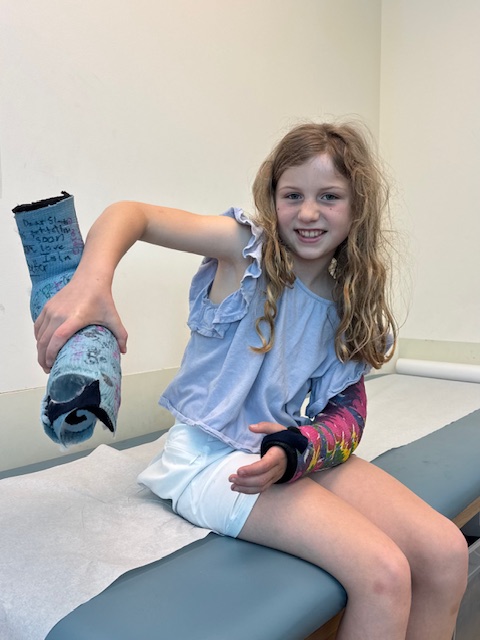
Over two weeks ago, Sloane broke both bones in her left arm attempting trapeze-quality jumping from a swing. She received a soft cast at first, after some manipulation of the bones to correct their position. A week later she received her hard cast. The one she could hardly wait for her friends to sign it.
Another week passed, and she returned to the doctor for an X-ray of her arm to make sure the bones were healing properly.
They weren’t. The bones had somehow slipped while in a solid cast. The cast needed to be removed and she had to begin again.
It wasn’t good enough.

There are two extremes in the continuum of acceptable behavior or outcomes. The low end is “good enough”. This is an allowable state that could be made better if effort were applied, but for many, it’s satisfactory. Good enough is often what students turn in for schoolwork.
The other end is reserved for perfectionists and people who seek to make everything good, excellent. These are people who see things as “not quite good enough yet.” They’re compelled to improve whatever they have or whatever they’re working on. They’re unsatisfied with mediocrity and will strive for the best they can do.
There is no room for “not good enough”. That is unacceptable to everyone.
Sloane’s broken arm wasn’t dealt with well. The bones shouldn’t have slipped. She shouldn’t have to tolerate wearing a cast longer because it wasn’t done right the first time.
We’ve all had to deal with times when our efforts aren’t good enough, or what we’re being offered isn’t good enough. It’s being left off the invitation list to a party you thought you were good friends with the host. It’s working overtime to write a paper for a teacher only to find she doesn’t agree with your conclusions and marks you down for them. It’s wanting to be accepted into a certain school only to find that your SAT score isn’t quite high enough for acceptance.
We all experience many things that aren’t what we’d like, but we feel forced to settle for them because we have no other options.
Back in Jesus’ day, the religious leaders tried to force the Jews to follow all the laws perfectly–613 laws that they prided themselves on keeping. Add to that all the traditions that had to be followed, and it became close to impossible to live what they considered a holy life. Paul himself, a one-time Pharisee, said, “For everyone has sinned; we all fall short of God’s glorious standard.” Romans 3:23. Being a holy God requiring perfection, we can’t achieve heaven on our own. We’re not good enough.
God doesn’t leave us stranded with our guilt and shame. He encourages us to trust His Son to pay our debt for us.
“Yet God, in His grace, freely makes us right in His sight. He did this through Christ Jesus when He freed us from the penalty for our sins. For God presented Jesus as the sacrifice for sin. People are made right with God when they believe that Jesus sacrificed His life, shedding His blood, on our behalf.” Romans 3:24-25
We’re not capable of being good enough. Each day, we’re bombarded with negative thoughts, temptations, and a multitude of ways to bypass the rules.
Where Sloane needs doctors to do their jobs well, we’re dependent on a God who loves us enough to forgive us for the mess we make. He chooses to love us; He created us to be loved by Him.
His grace is the gift of forgiveness in Jesus.
We don’t need to beg Him to forgive us. We ask; He answers.
God is more than good enough.


 Tip of My Iceberg
Leave a reply to Lynn Maynard Cancel reply