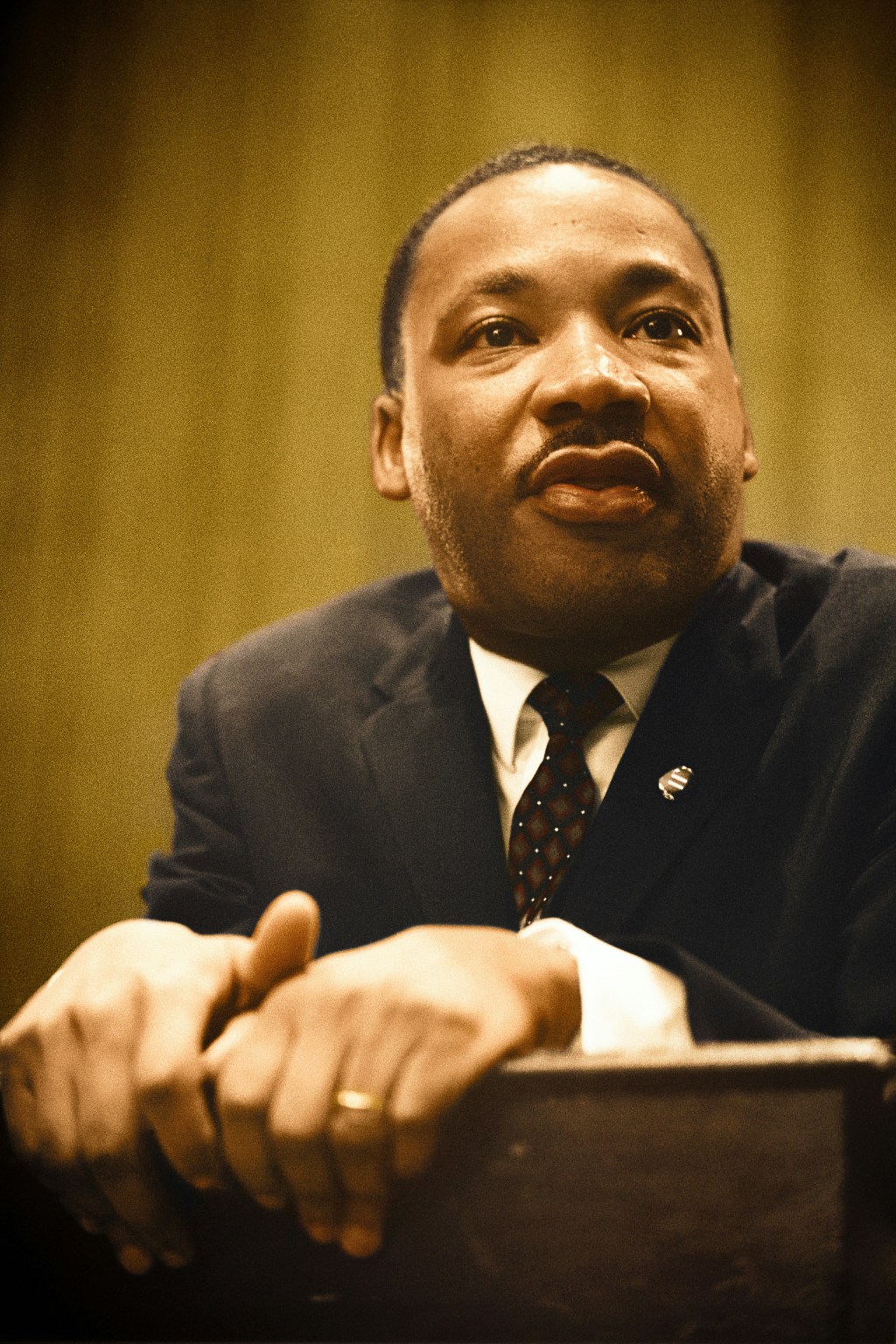
photo courtesy of Unseen Histories on Unsplash
I grew up in a white midwestern town. I remember only one young man of color in high school who was kind, gracious, and soft-spoken.
When I got to college, some of my best friends were people of color. Since joining the staff of a large non-profit, I’ve had the opportunity to work with people who aren’t like me, and it’s changed the way I see the world. I have an incredible people curiosity, and it’s given rise to questions that I’ve asked of friends who see life differently.
I asked my friend Rebekah once if it was okay if I saw her as my friend without distinguishing her as my black friend. Her reply surprised me. “You can’t separate me from my color because that’s a big part of my story. I’d never ask you to not consider your whiteness because it has defined much of who you are.”
I’ve always been aware that we aren’t responsible for choosing to whom or where we’re born, the setting of our stories, and the development of plot lines in each of our lives. I grew up as a middle-class white girl with a Dad from Texas and a Mom from Chicago. Their influence on my life impacted how I experience the people who populate my story. My relationship with Jesus, who sees all people as equal and worthy of His love, has changed how I see others.
I grew up in a culture that preferred similar rather than unique. When Dr. Martin Luther King, Jr. began his ministry to a people who deeply longed for a sense of hope and a way forward, I was impressed with how he looked at life, not with bitterness, but with hope. His heart of forgiveness surprised many because the Civil Rights Movement pointed out all the inequalities for people of different ethnic backgrounds.
“We must develop and maintain the capacity to forgive. He who is devoid of the power to forgive is devoid of the power to love. There is some good in the worst of us and some evil in the best of us. When we discover this, we are less prone to hate our enemies.” Quoted from Dr. King’s book, “A Gift of Love”.
He knew the value of forgiveness because he believed in the value of people. He saw us each created in God’s image, no matter how we look or where we come from.
Jesus also lived in a society where being different was a challenge. He came upon a woman getting water in the middle of the day and asked for a drink. He knew exactly who she was and what she’d done, a Samaritan woman who had no religion or morals who was seen as a social outcast because she’d had five husbands and the man she was with wasn’t married to her. “The woman was surprised, for Jews refused to have anything to do with Samaritans.” John 4:9. As a Jewish Rabbi, it would have shocked many to hear Him asking for her help. Jesus knew her heart was heavy, and He spoke to her of forgiveness and grace, embracing her differences with kindness and not judgment. She was the first person to whom He revealed that He was the Messiah.
We celebrate Martin Luther King Jr.’s life today not because he was perfect but because he saw that every person needed love and forgiveness. This is what makes us the same—we all need to be loved and feel like we belong. We can’t muster the compassion to do that on our own–our own humanity points out our differences; our nature makes us critical of those different from us. Jesus helps us see people through the eyes of God who sees all of His creation as worthy of His love and care.
Not an easy task, but one Dr. King spoke to in his book “Strength to Love”:
“The ultimate measure of a man is not where he stands in moments of convenience and comfort, but where he stands at times of challenge and controversy.”
Where do you stand?


 Tip of My Iceberg
Leave a reply to Michael Cancel reply