
Our recent Florida freeze did a number on many of our outdoor plants. The wind blew off most attempts at covering them, so many literally bit the dust. One in particular, our elephant ear plant, looked scruffy enough to make us choose to uproot it and make space for a new plant.
As we uprooted it, the roots seemed to grow like magic in the pot. We kept pulling it out, like a magician pulling scarves from his hat. When we finally pulled the whole thing out, the root system was almost six feet long and had consumed all the potting soil. The pot it was in was quite large, but the roots took up all the space.
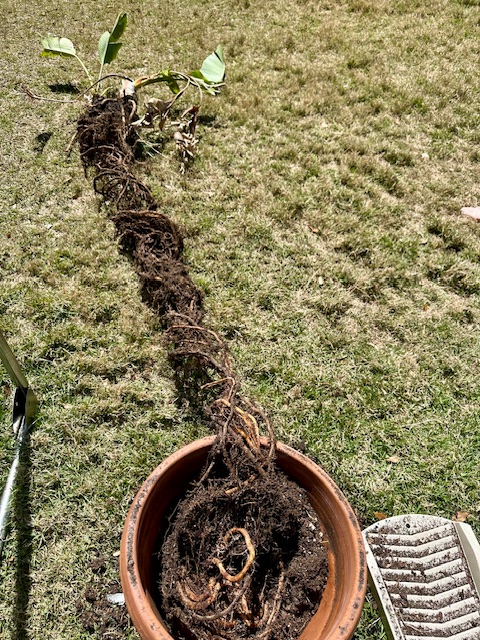
I’d never seen anything quite like this. As it emerged from the planter, it made me think of an alien materializing from dirt. The roots had wound around the inner circumference of the planter like a skein of yarn. Pulling it out was the unravelling of the ball.
I’m not a gardener by nature. I love plants, but I forget to water them, and I’ve also been known to soak them till the roots drown. But this was beyond anything I’d ever encountered in my interactions with dirt and fertilizer.
What it really reminded me of was what a penchant for bitterness or resentment could look like, a long, deep root that thrives on neglect, anger, and discontent. I’ve known people in my time who can hold a grudge with the best of them. I’ve been on the receiving end of unforgiveness; it destroys relationships.
Resentment can become a nasty habit if we refuse to forgive and forget what others have done to us. Saint Augustine of Hippo once said, “Resentment is like taking poison and hoping the other person dies.” It’s also incredibly exhausting to hold a grudge; if you don’t forgive, it’s always there, reminding you of something that didn’t go the way you wanted. Dale Carnegie, an American author and a pioneer in self-improvement, once said, “Our fatigue is often not caused by work, but by worry, frustration, and resentment.”
Jesus well understood the value of forgiveness. He came to this world to forgive all our wrongdoings. When His disciple, Peter, asked Him how often he should forgive someone who’d wronged him, Jesus said, “Seventy times seven”-offering unlimited forgiveness rather than keeping count of offenses.
He then told a parable about a king who was bringing his accounts up to date. A certain man had borrowed a huge amount of money from him that he couldn’t pay back. The king was going to sell him and his family as slaves to pay the debt, but the man begged for patience, saying he’d pay it back as quickly as he could. Out of compassion, the king forgave him his debt.
This particular man then went to another servant who owed him a small debt and demanded immediate payment. When the servant begged for time to pay it back, his creditor refused to wait. He had the man arrested and jailed.
When the king heard of this, he challenged the man to explain how he wouldn’t forgive a small debt when the king had forgiven him a huge one. This man was thrown in prison and tortured until he paid his full debt.
Jesus used this parable to explain why we should be forgiving of others. A lack of forgiveness produces physical, mental, and relational damage. Instead, Jesus teaches that we should have hearts of mercy and kindness. “Make allowance for each other’s faults, and forgive anyone who offends you. Remember, the Lord forgave you, so you must forgive others.” Colossians 3:13.
The root of that plant had grown so large that there was no room for life in the plant. When we allow a root of bitterness and unforgiveness in our hearts, it stifles our lives and destroys our joy.
It’s best to cut that root before it gets too big.
 Tip of My Iceberg
Leave a comment